Unified three platforms into one onboarding experience for 40K+ business clients
Clients were forced to chase tasks through emails and disconnected systems, repeatedly self-tracking and re-orienting with no clear source of truth.
We replaced the disjointed experience with a single, guided onboarding flow, a progressive checklist with embedded walkthroughs and resources that turned confusion into momentum.
RESPONSIBILITIES
Service design, Workflows, Hi-fi prototypes, Accessibility QA
DURATION
10 months
PLATFORM
Web (Desktop optimized)
Reduced projected support by 60%
Guided self-serve flow cut routine calls and freed support for high-value migrations.
Freed Relationship Managers from 2-3 Days Process
Digital setup reduced RM configuration work, freeing time to build new client relationships.
Greater Confidence to Complete Complex Setup
Progressive disclosure in complex tasks reduced confusion and enabled self-serving setup and plan operations without disruption.
IMPACT
To comply with Non-Disclosure Agreements, proprietary product details in this portfolio have been anonymized and metrics have been generalized. This ensures the protection of confidential information.
Operating model I put in place
Because we had limited data and multiple stakeholder groups, I created a lightweight operating cadence to keep decisions moving:
Service blueprint as source-of-truth: aligned teams on roles, dependencies, timing and pressure-test the journey and identify failure points.
Weekly touchpoints: used to gather actionable feedback, clarify requirements, and de-risk the next iteration.
Stakeholders
Business ops, relationship managers, technical leads, and banking directors.
First draft: mapping the current onboarding process. (Feel free to enlarge the journey map)
What we discovered
Data Migration Complexities
Can platform-specific data (i.e. permissions, approval) and platform-agnostic data (payees, templates, etc.) be migrated automatically?
Different Client Tiers
Three distinct journeys for small business, mid–size, and enterprise clients needed different onboarding experiences based on their services and size.
What we aligned on
Client Oversight is needed
Automation is the ideal, however admin oversight is needed to review any data that might pose risks such as permissions, approval rules, etc.
Different Treatments
It was determined that small and mid–size business clients will be digitally onboarded. While enterprise clients will receive white glove treatment (that’s out of my scope).
What changed because of this alignment
The blueprint gave everyone a shared view of the journey, which aligned teams on roles, dependencies, and timing.
Seeing its impact firsthand, stakeholders began advocating for service design as a way to tackle future cross-platform challenges.
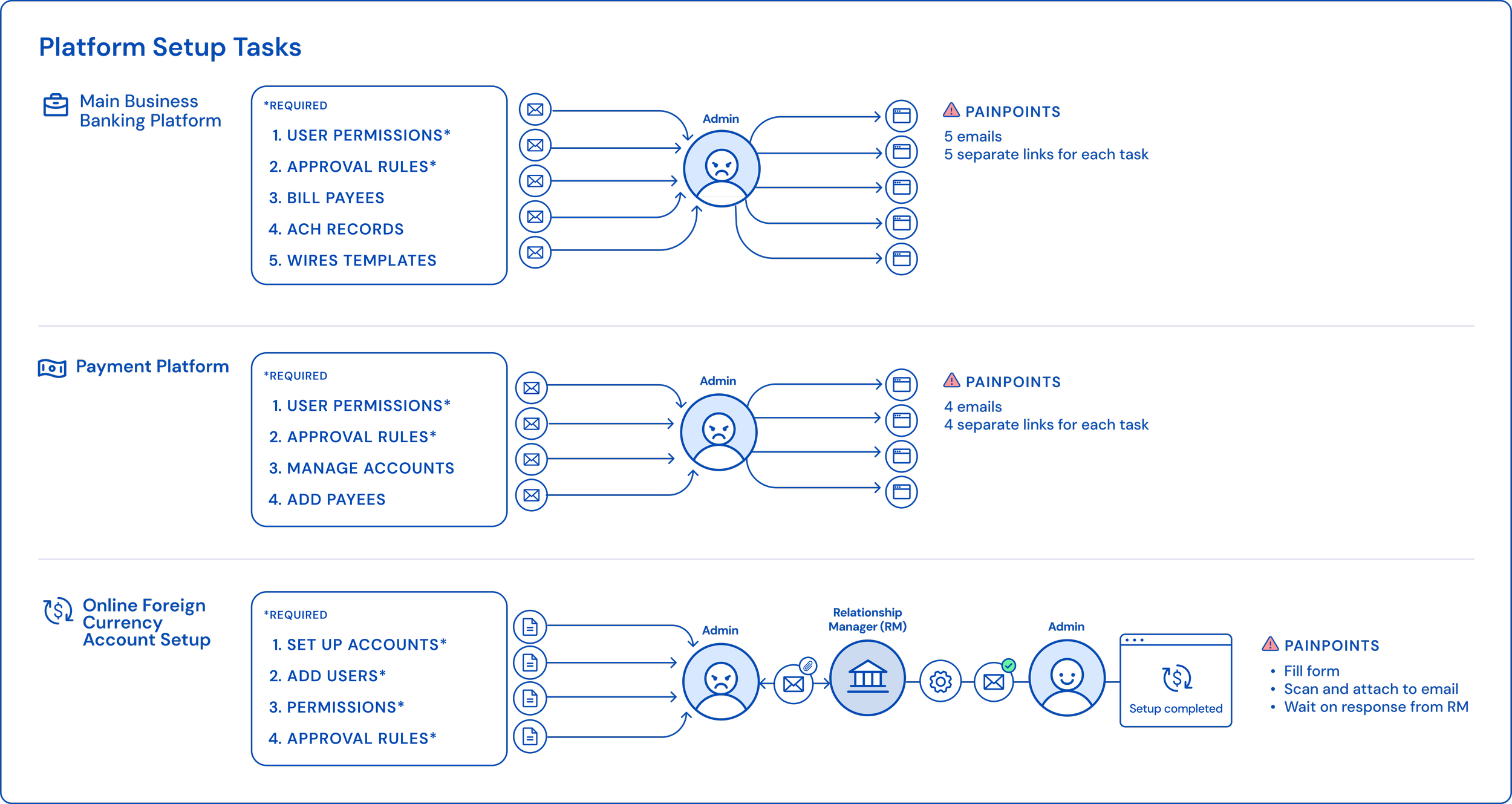
The Challenges of Onboarding Experience
Admins receives separate emails for each setup task, each linking to a different, non-intuitive location across platforms, forcing them to self-track progress and repeatedly reorient.
While foreign currency setup relied on offline forms and back-and-forth with relationship managers.
Constraints That Shaped the Solution
One-time Build
The acquisition flow was a single-use tool, so we had to deliver a clear experience while keeping engineering effort low.
Platform Dependencies
User and permission data flowed from the core banking system into the payments platform, creating strict rules the onboarding experience needed to respect.
No Traceability
Although clients had six tasks to complete, we couldn’t build a connection between our onboarding list and legacy platforms to know if the tasks were completed.
First Attempt: One-Pager
The idea was to bring together all the setup steps for both the main banking platform and the payment platform in one place (the 3rd platform was out of scope), so clients could see their progress at a glance and self-check once they complete the task.
Tasks opened in separate tabs, and admins returned to the page to mark each one as completed.
When Simplicity Wasn’t Enough
As we shared this approach with our GTM and product teams, it became clear that clients would need more pre-disclosure information, context about each platform, more guidance about tasks, and lastly, a third platform setup that needed to be built from scratch
Breaking it down into steps
To support the growing complexity of onboarding, we redesigned the experience into a guided, step-by-step flow.
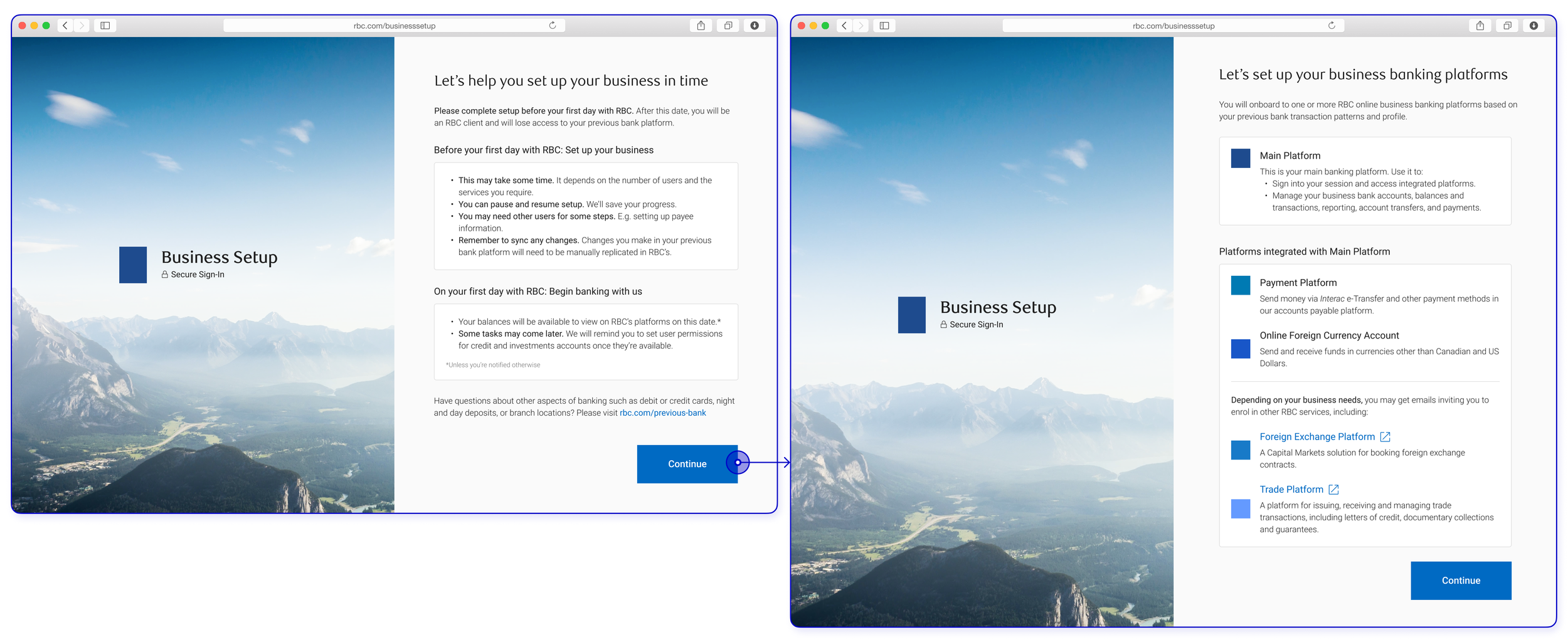
We added introductory pages that explain what to expect before, during, and after setup. Clients learn what each platform is for, and what they need to prepare ahead of migration.
Set Expectations Early
Review Accounts & Set Up Platform Separately
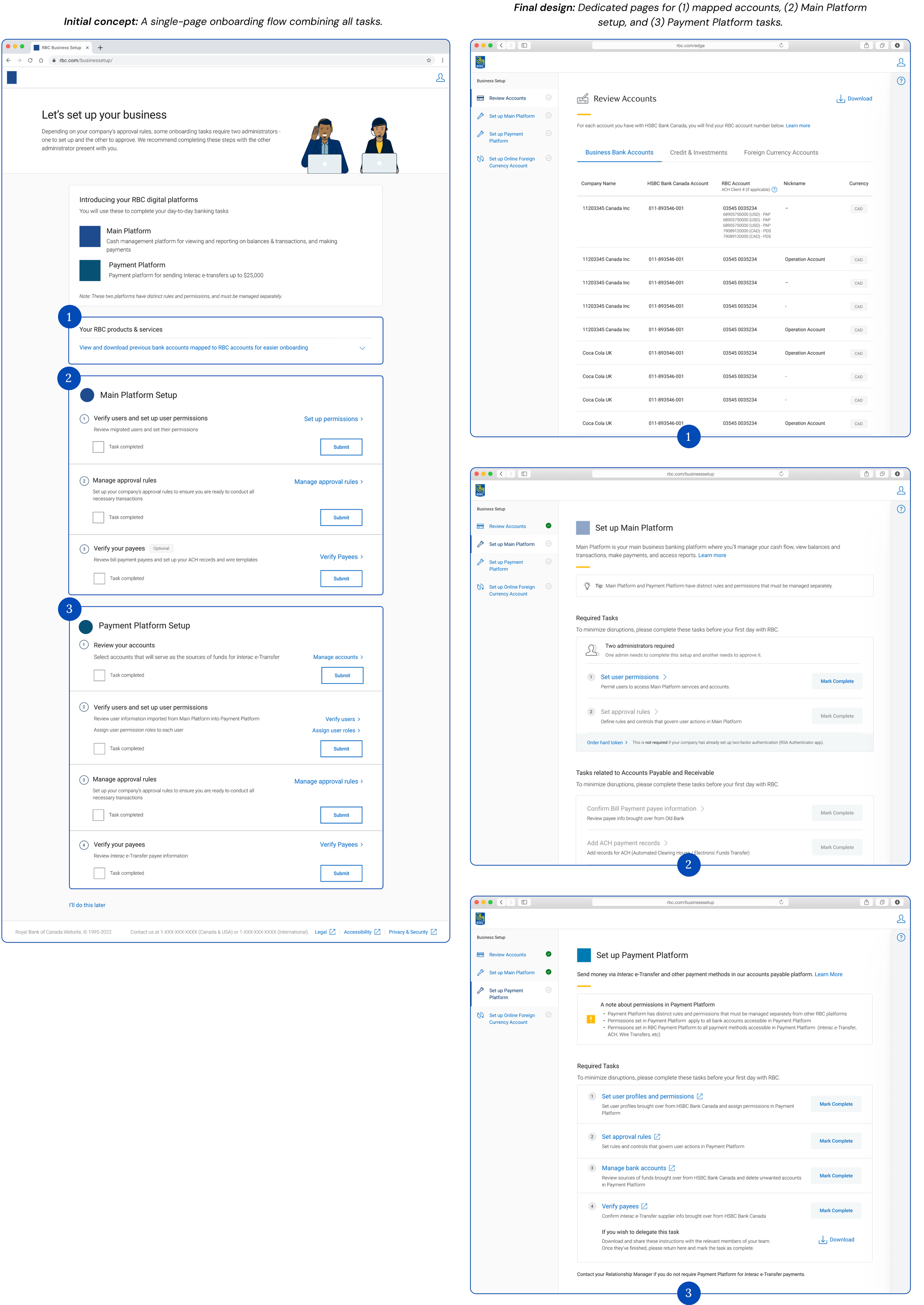
Clients first land on a separate Review Accounts page where they can see hundreds of mapped business, credit, and foreign currency accounts. From there, each platform has its own setup page with required tasks and progressive disclosure so admins know what to prepare and complete for that specific platform.
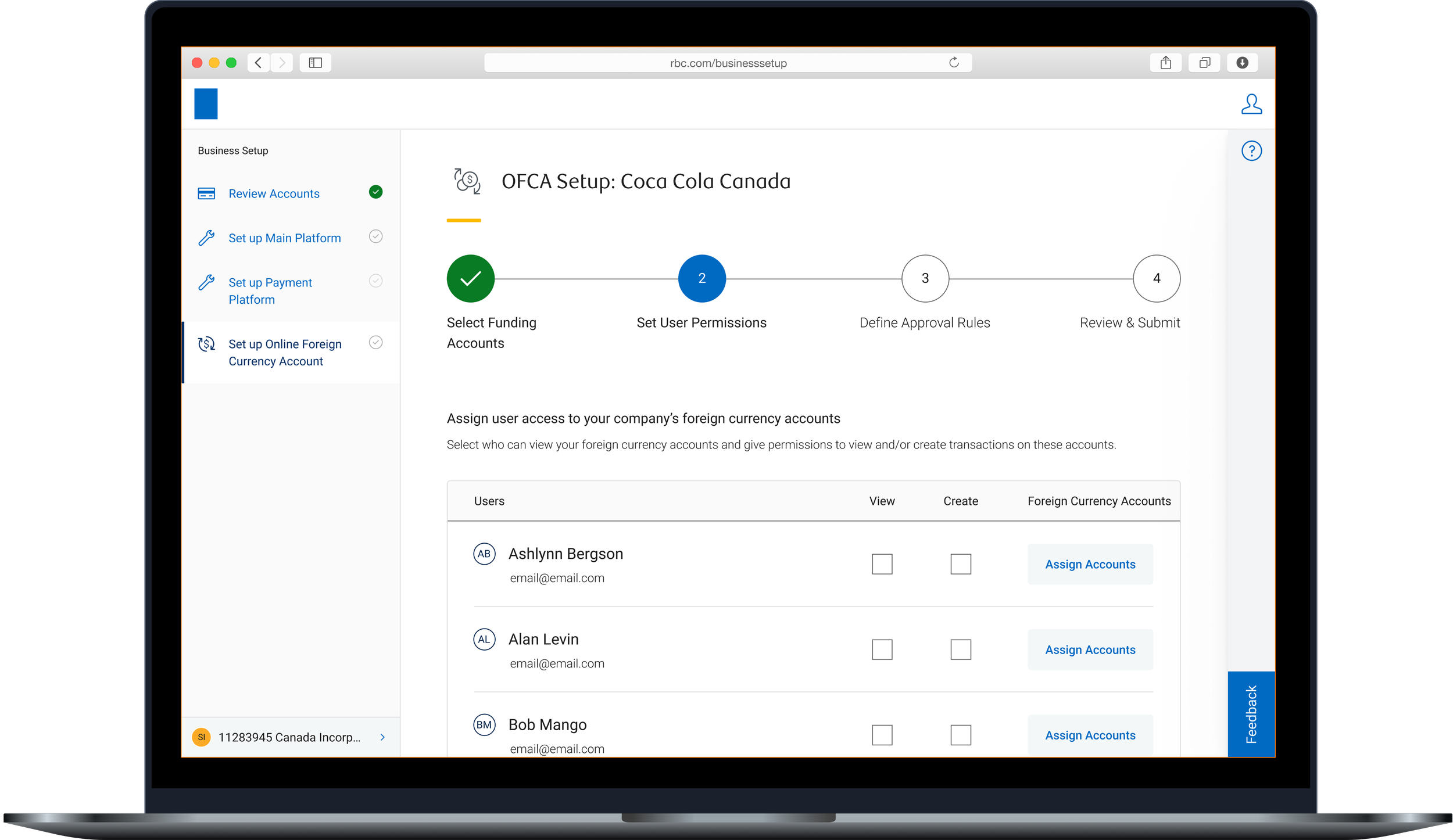
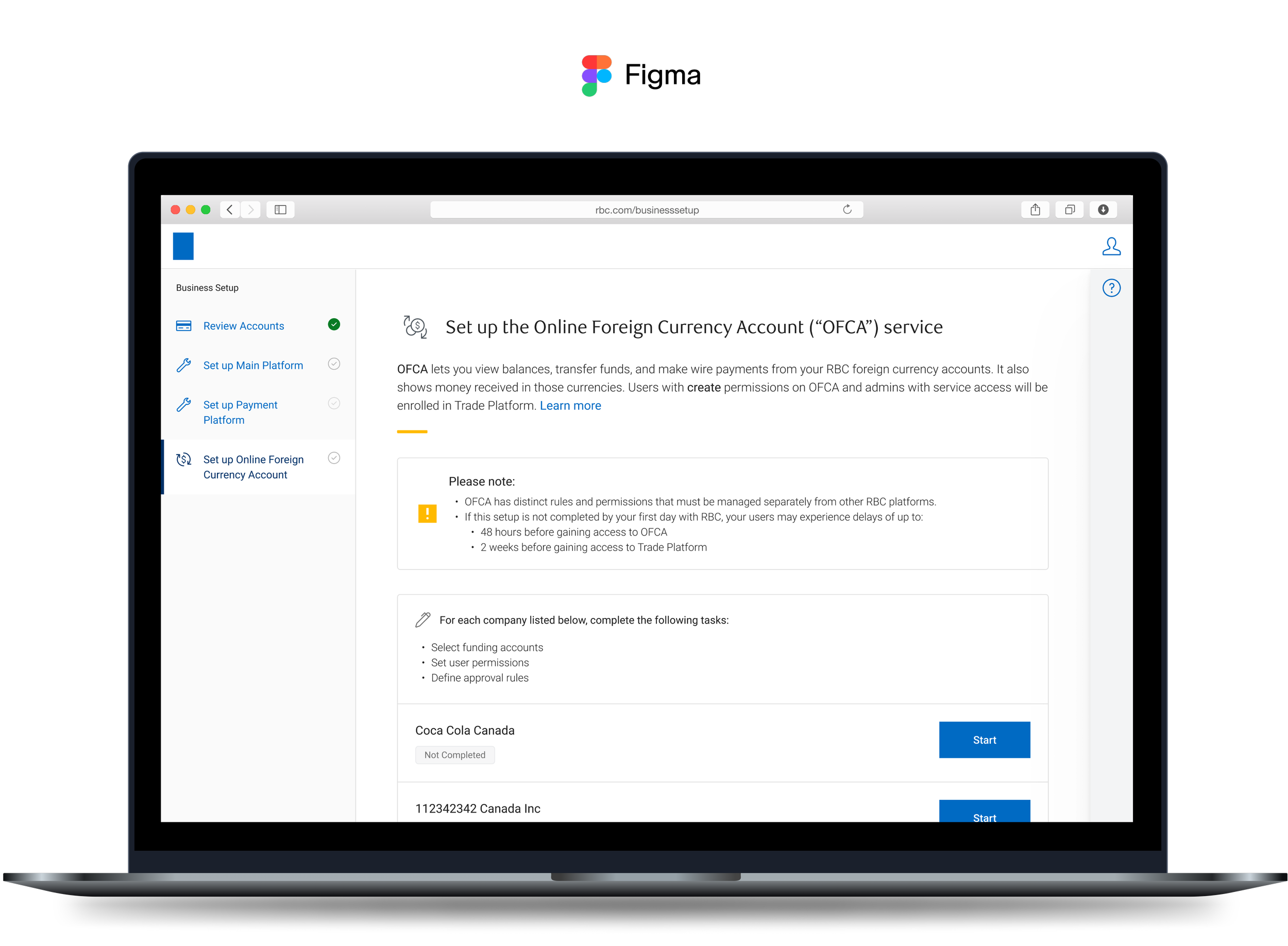
We digitized the paper-based workflow for setting FX permissions and approval rules so clients could transact in their foreign exchange accounts before migration.
This is the final direction, and I happily walk through the full multiple iterations and collaborative process in interviews 😁
Streamlined FX setup
Because we couldn’t test with actual clients due to NDA restrictions, we created scenario-based tests with a proxy group. We learned that users needed clearer explanations about why multiple platforms were involved and what to prepare before each step. This helped us strengthen the content so onboarding was easier to understand.
Testing what we built
Outcomes
Fewer support calls during onboarding
Clear context and in-platform help lowered onboarding questions directed to customer support.
Less reliance on relationship managers for FX setup
The new digital FX permissions flow allowed clients to complete setup independently, reducing the need for manual assistance.
Stakeholder Managment
Using service design artifacts and weekly touchpoints, I aligned expectations, gathered actionable feedback, and clarified requirements to enable iteration that balanced business goals and user needs.
Designing within legacy constraints
Created structure and clarity even when core platform UIs couldn’t change due to technical and timeline limits.
Working with limited user access
Partnered with research to interpret proxy feedback and pressure-test assumptions when client testing was restricted.
Orchestrating multi-platform setup
Turned interdependent steps into a progressive, guided flow anchored to a single source-of-truth platform.
What I’ve Learned
Looking Ahead…
This work revealed that platforms outside our ecosystem will need to be brought into the long-term roadmap.
Unifying them within a single business banking platform will significantly improve client experience and operational efficiency.